Does Beef Tallow Speed Up Trace in Soap Making
RusticWise is supported past its readers. When yous purchase through links on our site, we may earn an affiliate commission. Every bit an Amazon Associate, nosotros earn from qualifying purchases. Give thanks You!
Whether yous heighten your own cows or pigs, hunt, or just want to make use of an animate being part that's often thrown away, using animal fat to make soap is frugal and sustainable. While information technology may sound tricky, learning how to make soap from beast fat is a traditional practice that involves using but distilled water, lye, and rendered fat. Beef tallow or squealer lard are ii common types of fats.
Lard or tallow soaps are hard, long lasting, and moisturizing.
We'll expect at the diverse properties of mutual brute fats, and show you how to render, and make a elementary common cold process lather recipe using basic ingredients and beef tallow. Plus, we'll also share a recipe for a blended lard and vegetable oil soap.
Let's get started!
Why apply animate being fat to brand soap?
Using animal drippings or fat and turning it into soap is something homesteaders have been doing for generations.
The practical art of lather making actually goes dorsum farther—at least thousands of years. In 600 B.C.E., the ancient Phoenicians made soap from burnt ashes and caprine animal tallow. The Celts also produced soap fabricated of beast fat and plant ashes; they called information technology saipo which is where the modernistic term soap derives from.¹
Now, learning how to brand soap from animal fat isn't for everyone. If you are vegan, or vegetarian, or only apparently opposed to using animal products, then I understand yous won't desire to utilize animal fat.
However, this dorsum-to-basics approach to making soap using what you have available is a time-tested and reliable way to create good soap. Call it zero-waste living, or self-sustainability if you like.
Rather than throwing away an animal part, you can convert information technology to good apply and make something natural and useful for yourself and family unit.
While different animal fats have unique properties, most produce hard confined of lather with a flossy lather.
What'southward the difference betwixt lard and tallow?
While people ofttimes utilize these terms interchangeably, lard refers to pig fat, while tallow comes from a variety of grazing animals. Most unremarkably you'll observe beef tallow, simply there's too deer tallow, goat tallow, bear tallow, and sheep tallow.
Both lard and tallow make fine bars of lather.
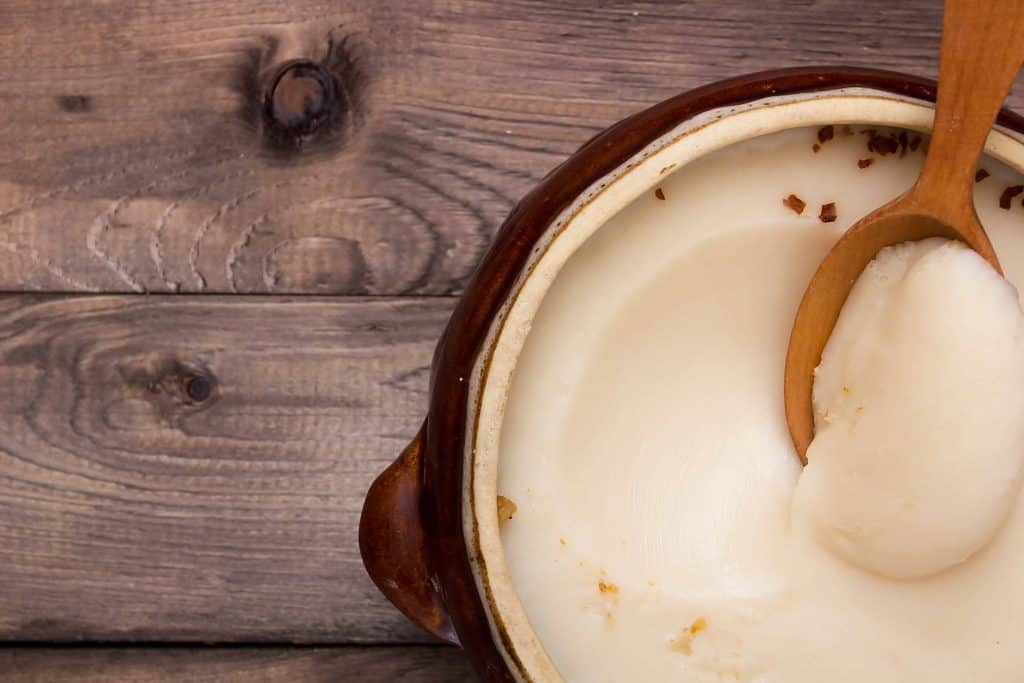
Credit: 123RF.com
Does lather made from animal fatty smell?
No, properly rendered animal fatty volition not produce evil-smelling soap. This is one of the virtually common concerns that people accept. Residue assured that you won't smell like a slab of salary, or a rib-eye steak afterward lathering with an animal fat soap!
A properly made lard soap or tallow soap should take a mild olfactory property. If the thought of animal fat soap still turns you off, you can e'er add together some fragrance oils or essential oils to mask the odor.
Benefits of making soap using animate being fat
The benefits of making your own soap using brute fatty are many.
- Cheap: Many vegetable oils, including kokosnoot oil, olive oil, or shea butter, can speedily add up. Using animal fat from your own animals is the cheapest soap making oil yous can apply. Even if you buy your own rendered lard, information technology'due south nevertheless cost-constructive if y'all're watching your pennies.
- Low waste living: I love the idea of not wasting any part of an animal—it shows respect to the animal and to the surroundings.
- Moisturizing (but not greasy): Lard or tallow lather bars are mild and moisturizing, without leaving the peel feeling greasy. They're great for those with sensitive skin or dry out skin.
- Makes good, long-lasting confined: Some vegetable oils used in soap making have a shorter shelf life as some oils oxidize rapidly. Not so with lard or tallow soaps. You'll find they produce hard and long-lasting bars of soap with like backdrop of palm oil.
Where to find lard or tallow
Some grocery stores sell rendered fatty in tubs or boxes. You tin can as well try asking a local butcher for leftover fat or trimmings (you'll have to render it of form yourself, which we'll embrace below).
Y'all'll also find rendered fat online at most soap suppliers, and on Amazon.
Of course, if y'all have your own animals at domicile (or take a farmer friend), you'll have access to free lard or tallow!
Types of animal fat and their properties in soap
Nearly beast fats are fine to apply in a one-fat homemade soap recipe (or single-oil lather). But the fatty from chicken and geese are too soft to use on their own.
Here's a look at the various properties of lard and types of tallow in lather. Notice that some are harder than others (a higher number shows more hardness).
Likewise note that every fauna fat has a different SAP value, or saponification number. This means that some types of fatty will require more (or less) lye to convert it into soap. The values are unlike depending on if you're using sodium hydroxide lye (NaOH), or potassium hydroxide lye (KOH).
It's always a good idea to run your numbers through a lye reckoner get-go such as Soap Calc. (That's where I obtained the following numbers.) http://www.soapcalc.net/calc/soapcalcwp.asp
Table: Animal Fat Properties in Soap
| Pig Lard | Beefiness Tallow | Comport Tallow | Deer Tallow | Caprine animal Tallow | Sheep Tallow | |
|---|---|---|---|---|---|---|
| Hardness | 42 | 58 | 12 | 45 | 69 | 51 |
| Cleansing | ane | 8 | 2 | 1 | 16 | fourteen |
| Conditioning | 52 | 40 | 79 | 48 | 31 | 31 |
| Bubbly soap | 1 | 8 | two | i | 16 | fourteen |
| Flossy lather | 41 | 50 | 10 | 44 | 53 | 37 |
| NaOH SAP | 0.141 | 0.143 | 0.139 | 0.138 | 0.137 | 0.138 |
| KOH SAP | 0.198 | 0.2 | 0.1946 | 0.193 | 0.192 | 0.194 |
As you tin can meet, goat tallow is the "hardest" when used as a single oil, followed past beef tallow, sheep tallow, and pig lard. Acquit tallow is the softest of fauna fats listed above.
An overview on rendering fat
An important part of learning how to brand soap from animal fatty involves learning to return fat. Rendered fat is just "clean" melted fatty that has been strained of whatever impurities.²
If you lot've nerveless fat from your own animals or a butcher, set up aside an afternoon to render fat for soap.
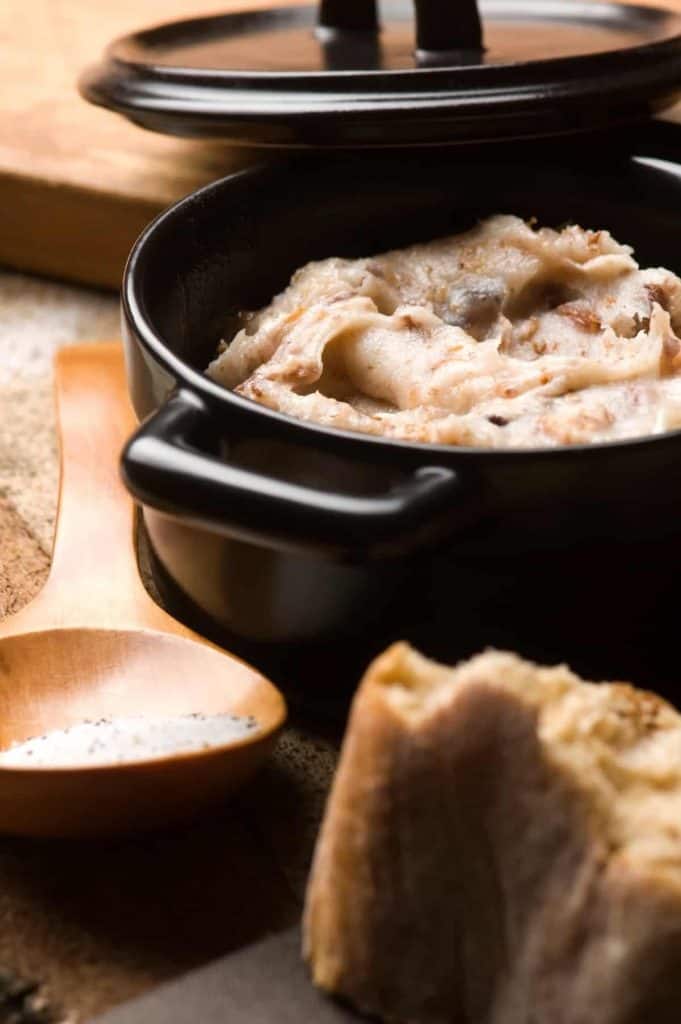
Credit: Yay Images
You'll demand:
- A large pot
- Wooden spoon
- Cheesecloth, sieve, or slotted spoon to remove cracklings
- Several glass mason jars or estrus-safe containers to store rendered lard
- Cutting lath and pocketknife
- Water (for 10 pounds of fat, use four cups of water; for 1 pound of fat use slightly less than 1/two loving cup of water)
- Cutting into modest pieces. Gather trimmings and cut into small chunks of fat. This helps speed things upward.
- Heat on low. Place pieces of fat into a large pot on the stove. Add h2o (slightly less than ane/2 cup of water per pound of fat) and rut on depression.
- Stir occasionally. Depending on how large your batch is, it can accept ane or ii hours to completely melt the fatty. Resist the temptation to turn up the heat—this may burn it.
- Expect for cracklings. Cracklings are the small-scale dark-brown pieces that form on the bottom. One time your fatty is finished rendering, you'll run into cracklings announced at the bottom.
- Strain and shop. Carefully strain the hot rendered lard or tallow by pouring into a sieve, or using a cheesecloth. It's important to utilise heat-proof containers such as mason jars. Continue straining until all cracklings are removed. Allow the rendered fat to cool before storing.
Your rendered fatty should have no (or fiddling) smell. At room temperature, information technology'll wait white and creamy. Shop in the refrigerator until y'all're set up to make lather from scratch.
Read up on lye safety first
If you've never made soap from scratch before, delight read up on bones soap safety before y'all begin.
The type of lye you'll need to use is pure sodium hydroxide lye crystals (Non the stuff with added chemicals!).
Lye is a caustic chemical that tin damage skin and eyes. It creates an exothermic reaction when mixed with water—it can reach temperatures of 200 degrees Fahrenheit (93 degrees Celsius).
When mixed with water, lye releases fumes, which is why y'all'll want to work in a well-ventilated area. Wearing protective equipment is likewise a must. Grab a pair of prophylactic goggles, gloves, and wear a long-sleeved shirt.
Use heat-safe and not-reactive utensils and equipment such as stainless steel and silicon, and some types of plastic. Lye reacts strongly with aluminum.
Check out an in-depth article about basic soap making supplies.
Tips on heating fat
Before you get started, it's expert to note that in that location are dissimilar ideal temperatures to heat various types of animal fat. Avert cranking up the heat as this may burn and darken the color of the finished soap.
| Blazon of Fatty | Temperature (Fahrenheit/Celsius) |
|---|---|
| Vegetable oil | 110–115 °F (43–46 °C) |
| Bear | 115 °F (46 °C) |
| Beef | 130 °F (54 °C) |
| Deer | 130 °F (54 °C) |
| Pork | 120 °F (49 °C) |
| Sheep | 130 °F (54 °C) |
How to make soap from animal fatty: step by pace
The following recipe uses the common cold procedure soap making process.
Since we already have an article nearly making lard soap, this i uses beef tallow.
Pure beef tallow soap recipe
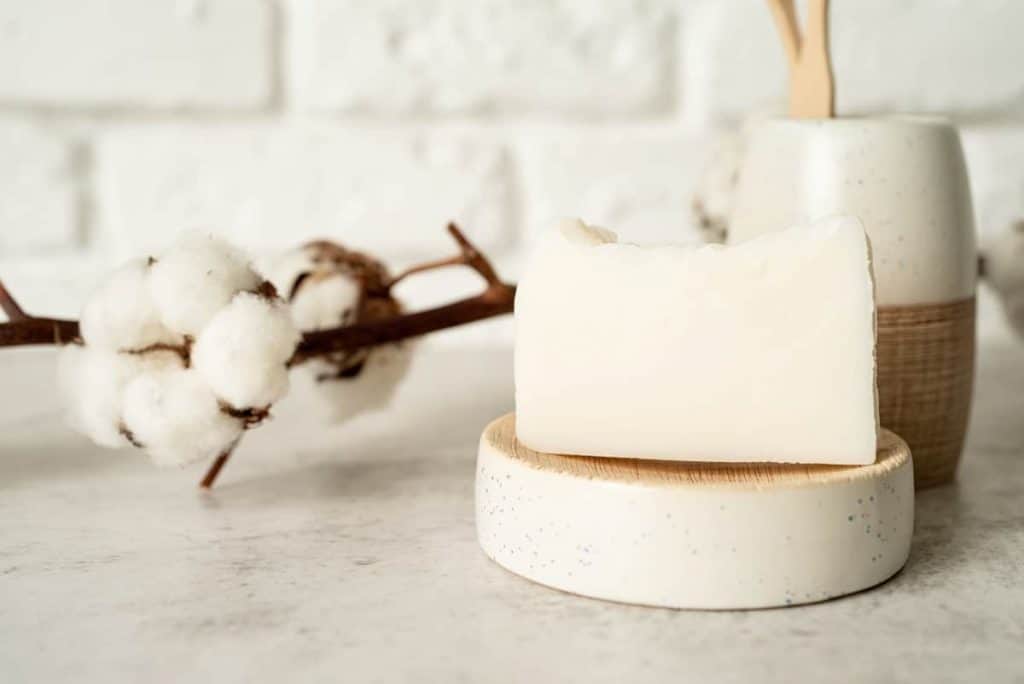
Beefiness tallow as a single oil makes for a white bar of soap that's difficult and long lasting. It won't create a bubbly lather, simply it makes a mild, flossy lather with plenty of pare loving moisturizing properties.
This recipe uses 5 percentage superfat.
Yield: Roughly i½ pounds of soap, or roughly 4 bars of soap
Supplies:
- Digital kitchen scale
- Thermometer (digital, infrared, or candy thermometer)
- Immersion blender (stick blender)
- Stainless steel bucket for melting the lard
- Heat-safety jug for the lye solution
- Safety spatula for stirring and scraping
- Loaf mold or individual silicone molds
- Wax paper or piece of cardboard to encompass the soap mold
- Old towels to insulate the lather mold
- Safety gear (goggles and gloves)
Ingredients:
Lye solution:
- 6.08 ounces distilled water
- 2.17 ounces sodium hydroxide lye
Fat:
- 16 ounces rendered beef tallow
Fragrances:
- Optional: 0.5 ounces of your selection of essential oil (lavander essential oil is a popular scent)
- Ready the lye mixture. Put your condom gear on—information technology's virtually to become hot in here! Measure the distilled water and add to rut-safe jug. Mensurate the sodium hydroxide and slowly add to water (Not the other fashion around). Let the lye mixture to cool.
- Measure and heat tallow in a saucepan. Warm the fat over depression heat in a stainless steel saucepan until melted, stirring occasionally.
- Bring to trace. Once the lye mixture has cooled and is of similar temperature to the combined oils, carefully add the lye to the oils. A expert temperature is somewhere around 110 degrees Fahrenheit (43 degrees Celsius). Apply an immersion blender (stick blender) to combine the soap concoction until information technology thickens and turns opaque (reaches trace).
- Add essential oil. Once your soap batter has reached trace, add together your essential oil and stir to combine. This step is optional. Yous can leave your bar unscented if you adopt.
- Cascade into mold. Pour the soap batter into a prepared mold. Cover with wax newspaper or a piece of cardboard. Wrap some old towels to insulate the soap.
- Set, cut, and cure. Permit the soap batter to absurd and harden (at least 24 hours). If soap has hardened, unmold and cut into confined. If bars are as well soft, permit it to fix for several more days. Allow the soap bars cure for 3 to 4 weeks in a well-ventilated room. You'll get a longer lasting bar this way.
Lard, olive oil, and kokosnoot oil recipe
A blend of vegetable oils combined with lard strikes the balance betwixt workout and cleansing properties. Coconut oil is a highly effective cleanser and creates fluffy lather. A splash of castor oil brings the bubbly lather most people love in a soap bar.
The following cold procedure recipe is from Alicia Grosso's The Everything Soapmaking Volume.
Yield: Roughly 1½ pounds of soap, or roughly iv bars of soap
Ingredients:
Lye solution:
- v ounces distilled h2o (172.36 grams)
- 2.3 ounces sodium hydroxide lye
Difficult oils/fats:
- 5 ounces lard
- 5 ounces coconut oil
Soft oils:
- 6 ounces olive oil
- 0.v ounces castor oil
Directions: Follow the aforementioned cold procedure steps every bit the pure tallow recipe above. In Step 2, cook the lard and coconut oil first earlier combining with the soft oils.
New to making soap? 🧼❓

References
- Britannica, Soap, Lather, https://www.britannica.com/scientific discipline/lather. Accessed January 2022.
- Emery, Carla (2012). The Encyclopedia of Country Living, 40th Anniversary Edition. Sasquatch Books. pp. 635–637. ISBN-thirteen: 978-one-57061-840-6.
- Grosso, Alicia (2013). The Everything Soapmaking Volume, third Edition. Adams Media. pp. ninety. ISBN 13: 978-1-4405-5013-3.

Source: https://rusticwise.com/how-to-make-soap-from-animal-fat/
0 Response to "Does Beef Tallow Speed Up Trace in Soap Making"
Post a Comment